The Quiet Factors That Influence Heart Health
A Neuro Rehabilitation Perspective This February
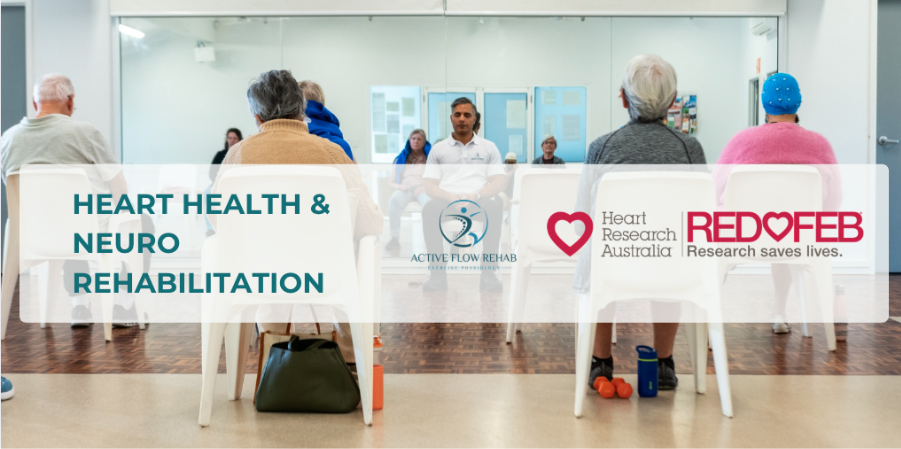
February is nationally recognised as a time to talk about heart health, with campaigns like REDFEB led by Heart Research Australia encouraging Australians to start conversations, raise awareness, and support life-saving research.
While heart health messaging often focuses on fitness or major cardiac events, there is another side of the conversation that deserves more attention – particularly for people living with neurological conditions, physical disability, or long-term mobility challenges.
From a neuro rehabilitation perspective, heart health is often shaped quietly over time by factors that are easy to overlook, but deeply influential.
Why Heart Health Can Be Missed in Neuro Rehabilitation
For individuals living with conditions such as stroke, Parkinson’s disease, multiple sclerosis, spinal cord injury, or acquired brain injury, rehabilitation priorities are understandably focused on function, safety, and independence.
The emphasis is often on:
Regaining movement and coordination
Managing fatigue, pain, or spasticity
Preventing falls
Supporting daily living
In this context, cardiovascular health can unintentionally move into the background.
Evidence shows that people with neurological conditions are at higher risk of secondary health conditions, including cardiovascular disease, largely due to reduced physical activity, prolonged sedentary behaviour, and ongoing stress. This makes heart health an essential consideration, even when it is not the primary diagnosis.
February’s heart health awareness is a reminder that heart health matters at every stage, including during long-term neurological care.
Why Ankush Can Speak to This with Confidence
Ankush brings over 16 years of experience working in neuro rehabilitation, community health, and aged care settings. Throughout his career, he has supported people with complex neurological and physical conditions across hospital, community, and in-home environments.
This experience provides a clear understanding that:
The nervous system and cardiovascular system are closely connected
Exercise needs to be carefully prescribed for people with neurological conditions
One-size-fits-all fitness advice is often inappropriate and unsafe
As an Accredited Exercise Physiologist with a strong neuro focus, Ankush understands how to support movement that is:
Evidence-based
Individually paced
Respectful of fatigue and autonomic responses
Designed for long-term sustainability
This allows heart health to be supported without overloading the nervous system or increasing risk.
The Quiet Factors That Influence Heart Health
Reduced Movement
Fear of falling, loss of confidence, fatigue, or lack of appropriate support can significantly reduce daily activity levels. Over time, this affects cardiovascular health.
Chronic Stress
Living with neurological conditions often involves ongoing appointments, uncertainty, and emotional load. Chronic stress is a recognised contributor to heart disease.
Nervous System Dysregulation
Neurological conditions can alter heart rate responses, blood pressure regulation, and recovery capacity. This makes guided, neuro-informed movement essential.
Social Isolation and Disconnection
Reduced community participation impacts motivation, mental wellbeing, and overall health, including heart health.
These factors are often subtle, cumulative, and under-addressed, yet they are modifiable with the right support.
Why This Matters for Carers, Coordinators, and Referrers
While carers and support coordinators play a critical role, heart health awareness in neuro care also matters for a broader network, including:
Support coordinators and recovery coaches building sustainable care plans
Aged care providers and case managers supporting long-term independence
GPs and allied health professionals coordinating multidisciplinary care
Disability support organisations focused on community participation
Families and informal carers supporting daily routines and wellbeing
For all of these groups, the message is the same: heart health does not require high-intensity exercise. It requires safe, consistent, and supported movement that fits the individual.
Exercise physiology provides a bridge between neurological care and cardiovascular health, without adding unnecessary complexity to care plans.
Integrating Heart Health into Neuro-Informed Care
At Active Flow Rehab, heart health is viewed as part of whole-person rehabilitation.
Support may include:
Gentle strength and balance training
Low-impact or water-based exercise
Fatigue-aware programming
Confidence-building movement in familiar environments
The aim is not performance or fitness targets. It is supporting long-term health, participation, and quality of life.
Funding Options to Support Access
Exercise physiology services may be accessed through:
NDIS (Improved Daily Living supports)
Home Care Package
Medicare Chronic Disease Management Plans
DVA and private funding options
This allows heart-supportive, neuro-informed movement to be integrated into existing care plans without additional burden on participants or families.
A February Reminder
Heart health does not pause because someone is living with disability or neurological change.
February’s REDFEB campaign is a reminder that awareness, prevention, and support matter at every stage of life and recovery. The quiet factors count, and addressing them early can make a meaningful difference.
If you’re a carer, coordinator, referrer, or individual wanting to understand how neuro-informed movement can support overall health, including heart health, we invite you to reach out for a conversation.
Support does not need to be intense to be effective.
It simply needs to be right.
Wondering how neuro-informed movement could support heart health?
If you’re a carer, coordinator, referrer, or individual wanting to explore safe, evidence-based exercise physiology options, we welcome a conversation.
Reach out to the Active Flow Rehab team to discuss what support may be appropriate at your stage.